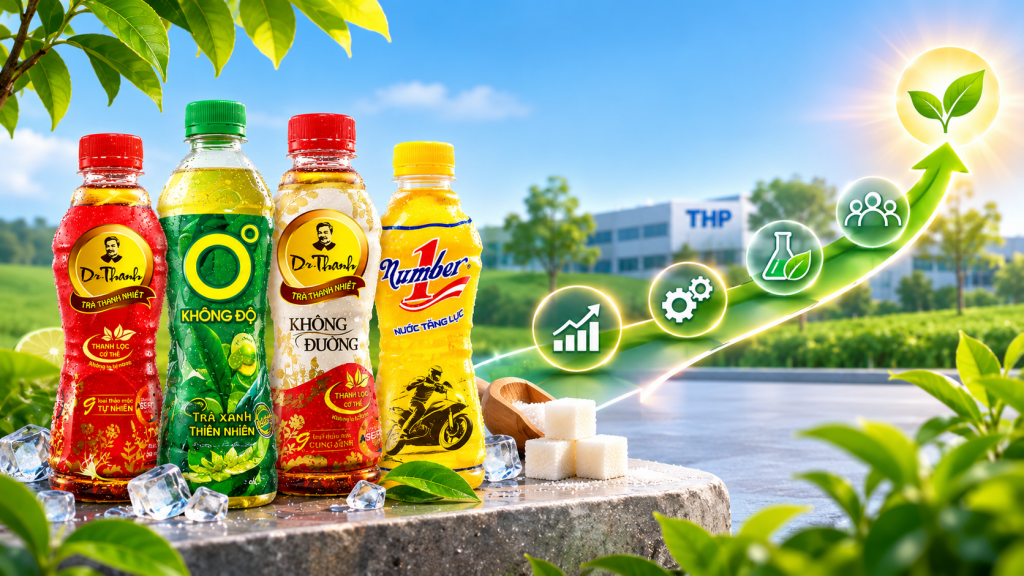
On 1 January 2027, Vietnam will tax sugary drinks for the first time. Non-alcoholic beverages with more than five grams of sugar per 100 millilitres will face an 8% excise tax, rising to 10% in 2028. For manufacturers, the question is no longer whether the rules are coming, but how ready each business is to work within them.
Vietnam is following a global pattern, and the pressure is pointing one way. The World Health Organization has urged it to go further, recommending a tax equal to 20% of retail price by 2030, structured by sugar content so that producers are rewarded for reformulating. Health advocates have called the 2027 rate a starting point that opens the way to higher rates. Boards should plan for a direction of travel, not a single rate.
The tax arrives alongside alcohol taxes that rise gradually to 90% by 2031, and one forecast sees alcohol’s share of Vietnam’s beverage revenue falling from 12% in 2025 to 9% by 2028–29. How consumers will respond is still an open question. One modelling study suggests demand for these drinks is price-sensitive, but it simulated a 20% tax, not 8%. Researchers are planning retail audits before the tax and again in 2027 and 2028 to track prices and how producers respond. Policy can change the price of a product overnight. Yet, it cannot immediately change what people enjoy, and taste remains the other variable in this complex business case.
In a previous piece titled “The Courage to Unlearn”, we wrote about what it costs to keep believing in a playbook after its logic has expired. Changing tax rules are a smaller version of that test. No company will be able to accurately predict how the market will react to the new tax regulations. However, what we pride ourselves on is agility. THP is among the first beverage companies in Vietnam to begin digital transformation, back in 2000, and one of our seven core values asks that today be better than yesterday, but not as good as tomorrow. Being ready to adapt to new rules and shifting tastes is part of how we work.
Three questions follow for any beverage makers. Where is our sugar exposure across the portfolio? How would volumes and margins respond at 8% and 10%, and who will move first on price? And which changes can we make quickly, and which will take years because they depend on formulation, supply chains, and, above all, whether customers will accept them? The answers will differ widely among companies of different scales and targeted segments. However, a company that has built agility and a propensity to change into its corporate culture like THP will always be equipped to anticipate and adapt.
“Rules will keep changing. The companies that last are the ones that were always ready to change with them.”
— Phương Uyên Trần